This week I spent two days in Tallinn with partners from the BIM4Gov project. People go to Estonia to see what a digital state looks like: since 2024 there has been no public service there that is not digitalised, and the last one to move online was divorce. In the same year, every municipality made it possible to apply for a building permit through a BIM model. We went to see how that works, and below I share my personal impressions.
The system works, and it works well. The whole country is covered by a digital twin, so a click on any building shows its use, structure, dimensions and cadastral data. A designer can download the model of the surroundings and place their own building into it. When applying for a building permit, they upload the BIM model to the platform and run 47 automated checks themselves, from room sizes to accessibility and escape routes, and see the results straight away, instead of waiting a month for the municipality to tell them what is wrong.
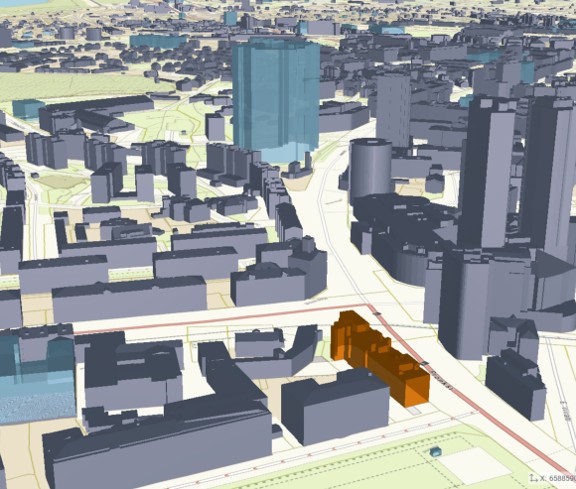
The decision on whether you get a building permit is still made by an official in the end. The difference is that the official no longer has to spend so much time checking details, which speeds up the whole process and leaves room to focus on what matters.
And yet only between 0.5 and 1 percent of applications go through the BIM permit today. The BIM permit, admittedly, is not mandatory, so applicants choose whether to apply through BIM or in the usual way. Christopher-Robin Raitviir from the City of Tallinn, who showed us the system and took part in introducing it, estimates that the problem is 90 percent social and 10 percent technical. It is a matter of trust in a digital procedure, of who is responsible for a decision made with the help of a machine, and of how ready the administration is to work differently than before.
At a conference with the Estonian Digital Construction Cluster we learned a bit more about the state of the sector. The cluster’s president, Tiit Hion, described it with two numbers. (1) The digitalisation index of Estonian construction, according to a study for the Ministry of Climate, stands at 26 out of 100. (2) The second number is zero: that is how many owners the common BIM requirements have, the rules that set out what data a designer must enter into a building model. The checks in the BIM permit rest on them as well, because the system can check whether a bedroom has eight square metres only if the model correctly marks the room as a bedroom. The requirements have been written, but the institutions have not agreed who will maintain them, change them when regulations change, and pay for that work. As a result, the new version is ready, but most public clients still work with the old one, while the City of Tallinn also has rules of its own that it is only now aligning with the national ones.
Miina Karafin of Verston, the largest road construction and maintenance company in Estonia, told a similar story from the contractor’s side. Their machines work from a digital model, and drones regularly survey the site and calculate on their own how much work has been done. The problem is on the client’s side, where requirements are set by three departments, each on its own: the one that runs construction, the BIM specialists and the maintenance department. So, for example, the contractor invoices the work done every month, and the client pays 90 percent and withholds 10 percent until the contractor delivers the digital model of the finished road. That model, however, can only be made once the road is finished, so on a site that lasts two or three years part of the contractor’s money is held back the whole time.
The deepest explanation came from Ergo Pikas of Tallinn University of Technology. In his view, the law, practice and ways of thinking are still tied to the document. The Estonian Building Code still defines a design as a document or a set of documents, so even the pilot of the general plan for the city of Tartu, built on data from the start, was in the end submitted as a PDF. For centuries a document has stood for proof and accountability in public administration, and moving from paper to PDF does not change that.
The day before, Raitviir had shown us what this means for automated checks. A regulation that calls for a “strong railing” or a “sufficiently lit staircase” is written to be interpreted by a person using common sense, and it cannot simply be translated into a check that a machine performs. That is why, he says, the old procedure should not be digitised as it is, but redesigned around data, because a permit that must end with a stamp on a document is not a digital permit, only paper in electronic form. Pikas gave Finland as an example of that approach. In 2023 Finland adopted a law on a built environment information system: instead of documents, data is submitted, entered once into a single shared system and checked automatically on submission.
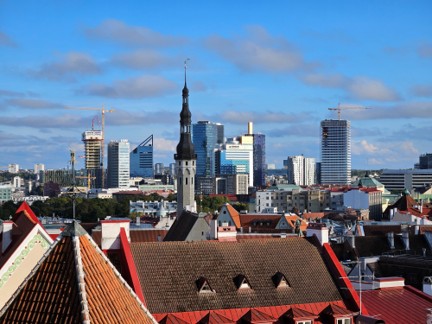
I came back from Tallinn impressed. Tallinn is developing fast, and you can see it with the naked eye, and probably the rest of Estonia too. Walking through the streets of Tallinn, I wondered how much of that is owed to the digital state and what it means for society. In short, should we be doing something similar or not? Do we even have a choice?
I think we will need to, and will have to, start by designing the basic logic of a digital system. What the Estonians did over 20 years while laying the foundations, we will have to do much faster. Perhaps it will be easier for us, though, because we can see in advance what their biggest obstacles were, and so we can be smarter before we build the same problems into our own system.
The Institute for Standardisation of B&H is working on identifying new BIM standards, and that is a good start. The Estonian experience suggests that behind it come questions that are not technical: who will decide what public clients require in the model, who will maintain those requirements and with what money, and whether regulations will be written around data or around documents. At the e-Estonia Briefing Centre we saw that the Estonian digital state was built over decades, and the BIM permit stands on foundations laid long before it. We have no such foundations, and we are still struggling with digital signatures. We are building walls without foundations, so it is no wonder we have trouble with every new function.
Hendrik Park of the Estonian cluster ended his presentation with a question for everyone in the room: if common BIM requirements are a public good, who owns them in your country? For us the question has neither meaning nor an answer for now, since we do not even have common BIM requirements, but it is worth keeping in mind for when we come to define them.
Raitviir’s advice for those who are just starting was simple: do not think about it for too long, launch a pilot. Raitviir does not know that we do not even have the foundations, otherwise he would probably have told us to set up the basic logic first and then launch a pilot. We will talk about this at the next meeting of the regional stakeholder group in Banja Luka in the middle of the month, when we continue the conversation on BIM and share what we saw in Estonia.
* This blog was translated from Serbian using AI. Original version can be found at https://edabl.org/o-iskustvima-sa-studijske-posjete-posvecene-bim-u-i-gradjevinskim-dozvolama-u-estoniji/